
Gut problems treated by Vitamin D (helps both innate and adaptive immunity - gut-friendly forms are best)
Vitamin D and Intestinal Diseases: Impact on Intestinal Immunity and Gut Barrier Function - Aug 2026
Diseases 2026, 14(8), 293; https://doi.org/10.3390/diseases14080293
by Erik Shorabaev 1,Amankeldi Sadanov 1,Baiken Baimakhanova 1,ORCID,Saltanat Orasymbet 1,Irina Ratnikova 1ORCID,Bakhytzhan Kerimzhanova 1,Zhanar Assilova 2,Zaure Datkhayeva 3, and Aknur Turgumbayeva 4ORCID - Kazakhstan
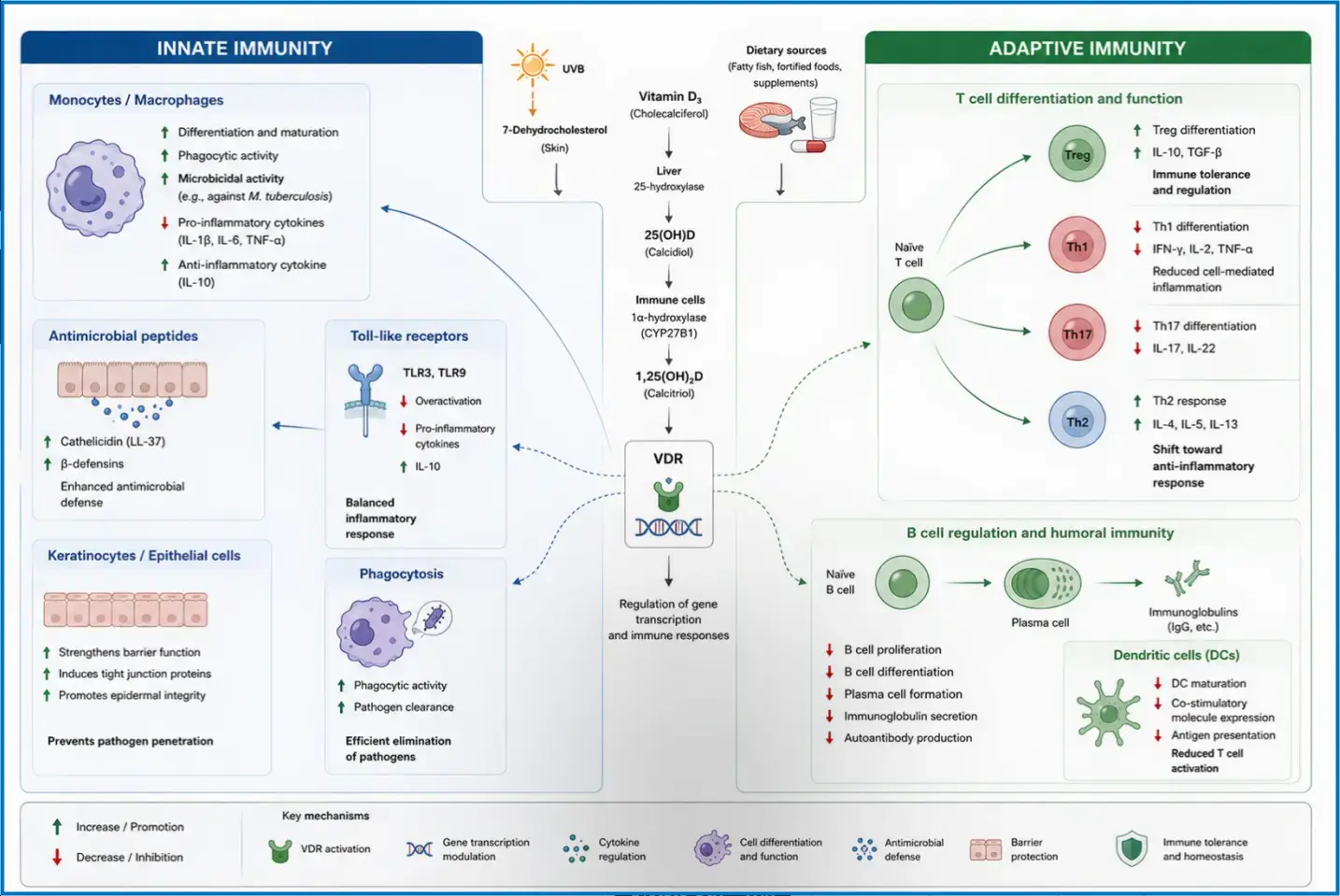
Background/Objectives: Intestinal diseases are a major global health problem due to their high prevalence, chronic course, and significant impact on quality of life. Increasing attention has been given to the extra-skeletal effects of vitamin D, particularly its role in immune regulation, maintenance of intestinal barrier integrity, and modulation of the gut microbiota. The aim of this review was to evaluate current evidence regarding the role of vitamin D in immune regulation, intestinal barrier function, and the pathogenic mechanisms of intestinal diseases, including inflammatory and functional gastrointestinal disorders.
Methods: A structured narrative review was conducted using the PubMed, Scopus, and Web of Science databases to identify publications addressing the role of vitamin D in intestinal diseases. The literature search was updated in May 2026 and included studies published between 2004 and 2026. The aim of this review was to summarize current evidence on the effects of vitamin D on immune regulation, intestinal barrier integrity, gut microbiota, and their clinical relevance in intestinal diseases.
Results: The included studies demonstrated that vitamin D plays an important role in maintaining intestinal homeostasis through regulation of innate and adaptive immune responses, preservation of epithelial barrier integrity, and modulation of gut microbiota composition. Vitamin D deficiency was associated with impaired VDR-dependent signalling, increased intestinal permeability, dysbiosis, and enhanced pro-inflammatory immune responses, which may contribute to the development and progression of inflammatory bowel disease, Crohn’s disease, ulcerative colitis, irritable bowel syndrome, and celiac disease.
Conclusions: Current evidence supports the important role of vitamin D in immune regulation, intestinal barrier protection, and maintenance of gut microbial balance. Further clinical studies are required to better understand its therapeutic potential in intestinal diseases.