
Pilot study found plastic detox restored fertility in 3 months
The Latest Science on Microplastics — And What They’re Doing to Your Body - Video May 2026
Summary by AI Studio of 70-minute interview
Here is a summary of the podcast transcript featuring Dr. Mark Hyman and Dr. Shanna Swan, highlighting the key takeaways and actionable advice regarding microplastics and chemical exposures:
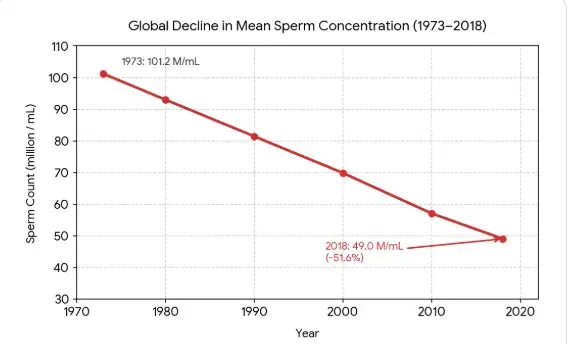
- The 50-Year Sperm Count Decline (04:26): Dr. Swan's deep dive into environmental health began when she validated a study showing a 50% decline in human sperm counts over 50 years, leading her to investigate the severe impact of endocrine-disrupting chemicals on reproductive health.
- The Danger of Phthalates (09:30): Phthalates are petrochemicals used to make plastics soft and flexible, and to help cosmetics and fragrances retain their scent. They are known anti-androgens (testosterone lowerers) and can cause atypical genital development in male offspring.
- Bisphenols and PFAS "Forever Chemicals" (18:14): While phthalates make plastics soft, bisphenols (like BPA, BPS, BPF) make them hard and artificially raise estrogen levels. Additionally, PFAS are used to create waterproof or non-stick barriers (like Teflon and rain jackets) but can severely disrupt immune and hormonal systems. The Dual Threat of Microplastics (23:37): Microplastics harm the body in two primary ways: the physical particles themselves invade human cells (found in blood, placentas, and breast milk), and they act as "Trojan horses" that carry toxic hitchhiker chemicals directly into the body.
- A "Plastic Detox" Can Reverse Infertility (35:38): In a documented 3-month intervention, couples with idiopathic infertility were taught to drastically reduce their chemical exposures. Testing showed their chemical body burdens dropped to non-detectable levels, sperm metrics improved, and 3 out of 5 couples successfully conceived.
- Beware of Thermal Receipts and Tin Cans (42:44): Bisphenols are heavily present on thermal store receipts and are easily absorbed through the skin, especially if you are wearing hand cream. They are also commonly used to line the inside of tin food cans, making it important to seek out bisphenol-free packaging.
- Never Microwave Food in Plastic (56:51): Heating plastic causes the chemical plasticizers to detach from the plastic matrix and absorb directly into your food. You should always use glass, ceramic, cast iron, or stainless steel for cooking and food storage.
- Everyday Ways to Reduce Exposure (54:30 - 1:03:50): You can dramatically lower your body's toxic burden by buying produce unwrapped, filtering or distilling your drinking water, using HEPA air filters, avoiding non-stick cookware, and strictly avoiding fragranced products (like perfumes, plug-ins, and scented laundry detergents).
Clipped from rough transcript
35:00) What the what do I do? You know? One thing I would say is watch the plastic detox, the movie because there's a It's on Netflix. Right? Yeah. It's on Netflix. Movie now. It came out in March, and, it's very widely watched or seen and shown. And that's just kind of an introduction of and I think it's it will give people hope because what happens in can I just say briefly what happens in filler? I'll just tell you what what what they this is when we conducted an intervention where we changed things in people's lives to in order to change their health. The things we changed was exposures to these chemicals we've been talking about and what we hope to change in their lives was their reproductive health. (35:58) So to do that, we enrolled and this is very small. It's a very small pilot. Okay? We enrolled six couples, one of whom dropped out for personal reasons. So, very small. We enrolled them at the beginning of a three month intervention, and then we got information about them. We got a lot of information. We got semen sample using a at home collection kit by Fellow. (36:24) Meat Fellow was the company. Worked very well. We also got their urine using, milling marker. And then we ask them lots and lots of questions. And Millie Marker has a team that's trained to ask people about their exposures and to inform them about what the risks of these exposures are. So it's an educational component too. (36:48) So the educational component and the testing component. In their in their serum sorry. In their urine, we got, the levels of the metabolite. So we knew what their exposure was when they started. And we repeated that halfway through, which was six weeks, and then we repeated it after twelve weeks was the which was the end of the intervention. (37:09) So here, the picture is pretty clear. You start out. You know what's in their body. You tell them how to reduce it. They try. They reduce it. And then we get their levels at the end. As far as their health goes, we get their sperm motility, morphometry, count, concentration, all these good things at the beginning, at the middle, at the end. (37:29) And then we see who gets pregnant. Now who are these people? These were people who had been trying for more than a year to get pregnant, and they had no obvious causes of their infertility. So idiopathic infertility. And they had to be willing to do this and be willing to be filmed, is a pretty big bar, and wanting to wanting to do this. (37:52) And but you don't. If you're listening, you don't need, you know, this intervention. You can do your own intervention, which is really interesting. And several people I've talked to, you know, hosts of shows and reporters are doing this now. You could do it if you want. You know, it's very easy, to get a kit, send your urine in, have it tested, try to lower your exposure following the tips in the film, deep plastic unplasticyourlife. (38:23) com will give you a lot of tips. I'll give you tips. And and then try that for three months. And why three months? Well, it's because it takes seventy days to make a sperm. So we are approximately, you know, giving a little window there. And, of course, the, exposure to both the man and the woman matters. So, you know, and then you see what happens. (38:48) You see, have your levels gone down? Has your sperm count gone up? And then if you add, which we hope to do, serum testing home serum testing is more difficult than home urine testing. Yeah. But we are, adding that and hoping to get hormone levels as well. So that's kind of the it's not rocket science. It's pretty simple. (39:10) And what did you find? And did you see after three months of doing kind of a plastic detox that people's numbers improved? Absolutely. Absolutely. And their sperm function improved? To nondetect from quite high levels, And that's shown in the film. And we also published a scientific paper in a peer-reviewed journal with these data. (39:29) And so their levels went down. And the main the main him the levels went down, but were the the main health impacts related to the sperm function motility morphology? Did that change? Yes. Their semen parameters changed. That's really helpful. Yes. I yeah. I'm I'm excited. I'm thrilled actually to have this for the small sample having this stronger result
59,000 studies contain the text: sperm and (microplastics OR plastics) as of May 2026
- Microplastics and male reproductive system:
A comprehensive review based on cellular and molecular effects - 2026 - Association of mixed exposure to microplastics with sperm dysfunction: a multi-site study in China - 2024
- Microplastics: a threat for male fertility - 2021
- Microplastics may be a significant cause of male infertility - 2022
- The Presence of Microplastics in Human Semen and Their Associations with Semen Quality - 2025
Half as many sperm now as in 1970's
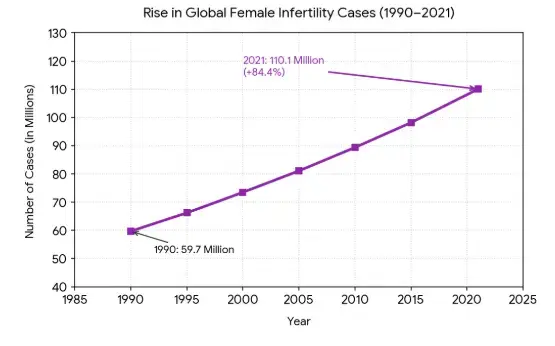
Infertility has doubled
Related in VitaminDWiki
- Infertility is a Chronic Health Condition - WHO
- Fertility improvement -Vitamin D is the best supplement - meta-analysis
- IVF 50 percent more likely to result in pregnancy if high vitamin D – meta-analysis
Microplastics
- Many ways to remove microplastics from water, even in the home
- Microplastics causing problems in humans, etc. (Vitamin D can help) - many studies
Microplastics are one of 20+ stressors