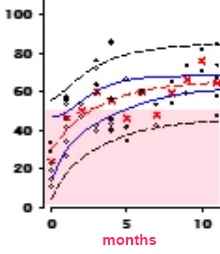
Peridontal Health improved by Vitamin D in many ways - Feb 2026
The Role of Vitamin D3 in Periodontal Health: Implications for Bone Metabolism, Immune Modulation and Inflammation Control
Nutrients 2026, 18(4), 577; https://doi.org/10.3390/nu18040577
Julia Moszura 1,Sebastian Gawlak-Socka 1,2ORCID,Jakub Pęksa 1,Natalia Bielecka-Kowalska 3,*ORCID andSebastian Kłosek 3,4ORCID POLAND
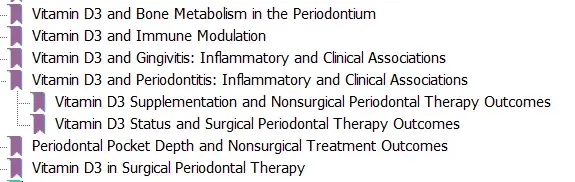
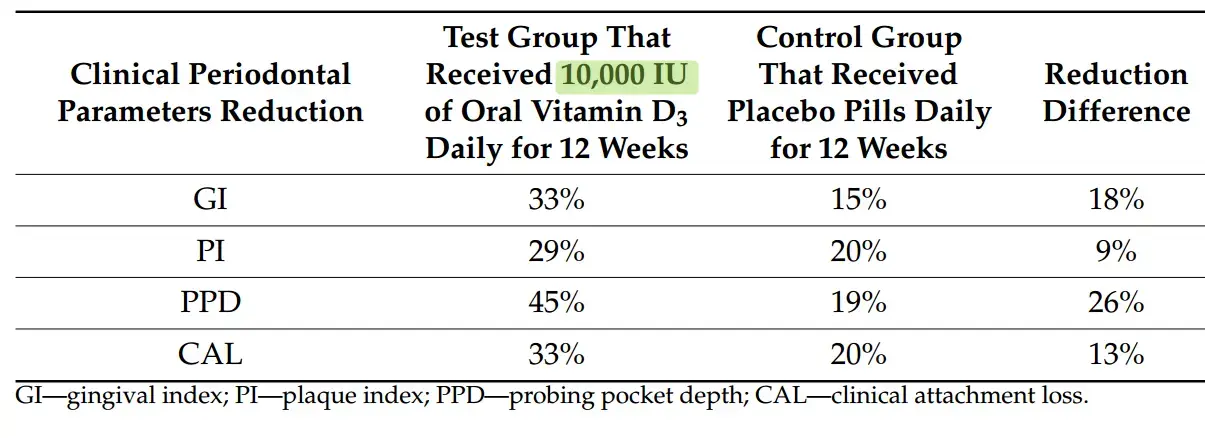
Vitamin D3 is a fat-soluble steroid essential for bone metabolism, immune modulation, and inflammation control, all critical for periodontal health. Its active form, 1,25-dihydroxyvitamin D3, binds to the vitamin D receptor (VDR) in periodontal cells, including periodontal ligament stromal cells, fibroblasts, osteoblasts, and macrophages, enhancing osteogenesis, antimicrobial defenses, and anti-inflammatory responses. Clinical and experimental evidence demonstrates that adequate systemic vitamin D3 levels and local activation in gingival tissues improve outcomes of nonsurgical and surgical periodontal therapies, reducing probing pocket depth (PPD), clinical attachment loss (CAL), and gingival inflammation. Dose-dependent supplementation shows greater clinical efficacy, and emerging evidence supports potential topical applications. This review integrates molecular mechanisms with clinical findings, highlighting the therapeutic potential of vitamin D3 in periodontal disease management.
Related in VitaminDWiki
- Caries (tooth decay) and Vitamin D - many studies
- Periodontitis reduced by Vitamin D - many studies
- Vitamin D may provide the most periodontal benefits of all nutraceuticals
10,000 IU of Vitamin D for 7 years with no excessive Calcium in 4,800 patients
NOTE The current study lasted only 4 months.
NOTE: There will have been little benefit in first 2 months
NOTE: Overweight and obese would need >20,000 IU to get the same benefit