Pesticides, herbicides, insecticides, Glyphosate, etc. deactivate Vitamin D genes
Pesticides \& Vitamin D: Genes Affected
| Pesticide Type | Key Examples | Effect on Vitamin D | Primary Mechanism | Vitamin D Genes Affected | Effect Direction |
|---|---|---|---|---|---|
| Insecticides (Organochlorine) | DDT, beta-HCH, lindane | Lower serum 25(OH)D in humans 1 2 | Lipophilic compounds accumulate in fat, disrupt vitamin D storage and steroid metabolism 2 | GC (vitamin D binding protein gene), VDR, CYP27A1 — also synergize with glyphosate to suppress CYP27A1 further 3 | ⬇️ Decreases Vitamin D |
| Insecticides (Organophosphate) | Chlorpyrifos | Disrupts vitamin D synthesis enzymes in skin cells 4 | Alters CYP enzyme activity in keratinocytes and fibroblasts exposed to UVB 5 4 | CYP27A1 (↓), CYP27B1 (altered), CYP24A1 (↑), VDR (↑ upregulated as a compensatory response) 5 4 | ⬇️ Disrupts metabolism |
| Herbicides (Glyphosate) | Roundup, glyphosate | Reduces vitamin D via at least 9 mechanisms 3 | Inhibits CYP enzymes needed for 25-hydroxylation and 1α-hydroxylation; epigenetic silencing via DNA methylation 3 | CYP2R1 (↓), CYP27B1 (↓ epigenetically silenced), VDR (↓ hypermethylated), CYP27A1 (↓ synergistic with aluminum) 3 | ⬇️ Strongly decreases Vitamin D |
| Herbicides/Insecticides (Organophosphates — soil applied) | Parathion, terbufos | Increases prostate cancer risk via vitamin D gene interaction 6 | Gene-environment interaction modifies how these pesticides affect cancer risk 6 7 | VDR, RXRB (retinoid X receptor beta), GC (rs7041 SNP — vitamin D binding protein) 6 | ⬇️ Modifies vitamin D pathway gene function |
| Fungicides (Triazole) | Prothioconazole, tebuconazole | Disrupts vitamin D metabolism via CYP inhibition 8 | Triazole ring structure directly inhibits CYP enzymes, the same family that activates vitamin D 8 | CYP2R1, CYP27A1, CYP27B1 (all susceptible to triazole CYP inhibition) 8 9 | ⬇️ Likely decreases Vitamin D |
| Rodenticides | Cholecalciferol (Vitamin D3) | Vitamin D3 is the active ingredient 10 | Supraphysiologic doses cause hypercalcemia and organ failure in rodents 10 | CYP24A1 (overwhelmed catabolism), VDR (overstimulated), TRPV6/TRPV5 (calcium transport genes dysregulated) 9 | ⬆️ Vitamin D toxicity |
| Fumigants | Methyl bromide, phosphine | Indirect effects via gut microbiome disruption 11 | Gut microbiome alterations impair microbial regulation of endocrine vitamin D pathways 11 | CYP27B1 (indirectly affected via gut-liver axis); GC binding may be impaired 11 | ⬇️ Possible indirect effect |
Key Vitamin D Genes — Quick Reference
For context, these are the core genes appearing across multiple pesticide categories:
- CYP2R1 / CYP27A1 — liver 25-hydroxylation (first activation step)9
seen by a Vitamin D test - CYP27B1 — kidney 1α-hydroxylation (second activation step, produces active calcitriol)5
- CYP24A1 — catabolic enzyme that breaks down vitamin D (upregulation = faster degradation)4
- VDR — Vitamin D Receptor, binds calcitriol to trigger gene expression12
- GC — encodes vitamin D binding protein (VDBP), which transports vitamin D in blood6
- RXRB — heterodimerizes with VDR to amplify vitamin D signaling6
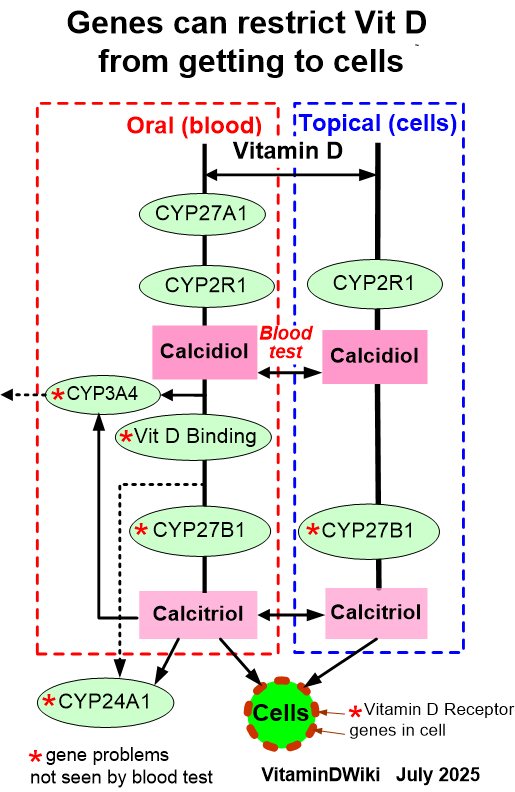
Gene chart on VitaminDWiki
Adverse Health Effects of Pesticides Transported from Point of Application
TrialSiteNews - April 2026
Huge summary of the health problems. Does NOT discuss vitamin D
- "A recent JAMA article examined proximity to golf courses and incidence of Parkinson’s Disease (PD), and found higher incidence of PD for people who lived within a few miles of golf courses. "
Related in VitaminDwiki
- DDT and other pesticides decrease vitamin D
- Pesticides increase risk of Cancers, Alz, ALS, Asthma, ADHD, etc. (all related to low vitamin D)
- Pesticides 8 X less likely to result in female infertility if take vitamin D
- Glyphosate reduces Vitamin D in 9 ways
- 13 X increase of Glyphosate in urine in 23 years – JAMA
- 20+ chronic stressors result in poor health
- Off topic – Roundup found to be 125X more toxic than its active ingredient (glyphosate)
Perplexity reference below
- Off topic – Roundup found to be 125X more toxic than its active ingredient (glyphosate)
-
https://beyondpesticides.org/dailynewsblog/2012/02/pesticides-linked-to-vitamin-d-deficiency/
-
https://vitamindwiki.com/pages/glyphosate-reduces-vitamin-d-in-9-ways/
-
https://vitad.org/pages/ddt-and-other-pesticides-decrease-vitamin-d/
-
https://aacrjournals.org/cebp/article/22/9/1557/69819/Pesticide-Exposure-and-Inherited-Variants-in
-
https://www.sciencedirect.com/science/article/abs/pii/S0048357523001177
-
https://www.epa.gov/rodenticides/rodent-control-pesticide-safety-review
-
https://www.sciencedirect.com/science/article/abs/pii/S0048357518305212
-
https://www.sciencedirect.com/science/article/abs/pii/S0048357521000432
-
https://pdfs.semanticscholar.org/695b/2572daf2b9b76a33c27a2c9434cfe43759ab.pdf
-
https://parkinsonsnewstoday.com/news/gene-mutations-tied-parkinsons-after-pesticide-exposure-study/