
Nanoplastics might result in more health problems than microplastics
From Microplastics to Nanoplastics: Human Exposure Pathways, Molecular Toxicity, and Emerging Health Risks - May 2026
INTERNATIONAL JOURNAL OF LATEST TECHNOLOGY IN ENGINEERING, MANAGEMENT & APPLIED SCIENCE https://doi.org/10.51583/IJLTEMAS.2026.150500059
Dr. Aruna Bohra - INDIA
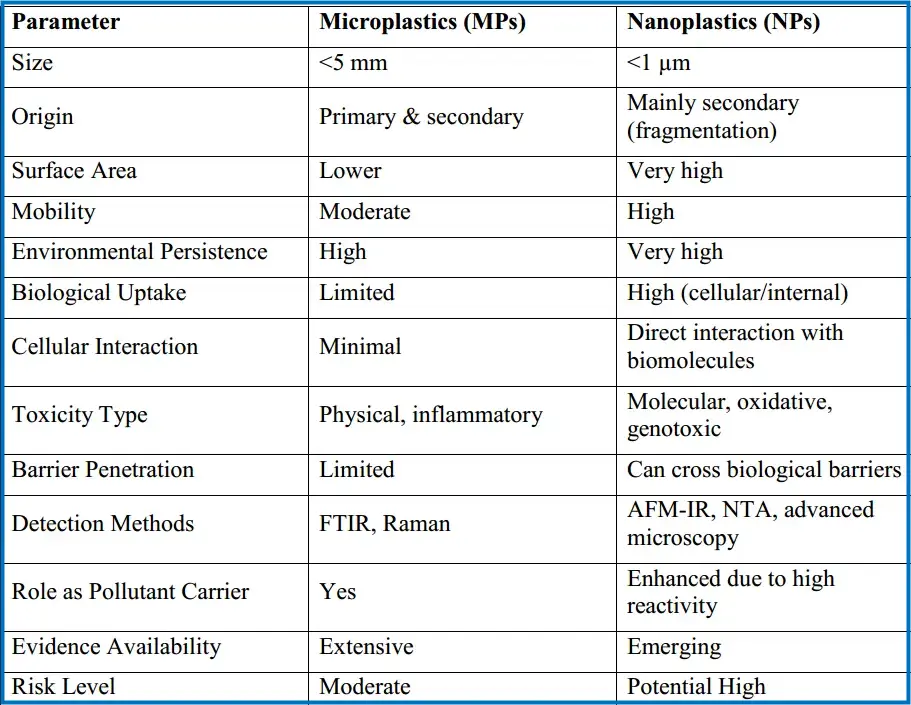
The widespread accumulation of plastic waste in the environment has led to the generation of microplastics (MPs; <5 mm) and nanoplastics (NPs; <1 pm), prompting growing concern about their possible effects on human health. (Andrady, 2017; Geyer et al., 2017). Although microplastics are well characterized, nanoplastics have only recently gained attention as a potentially more harmful class because their nanoscale dimensions increase reactivity and permit deeper biological penetration (Gigault et al., 2018; Koelmans et al., 2022; Sharma et al., 2023). This review critically examines recent advancements (2020-2025) in the sources, environmental distribution, exposure pathways, analytical detection, and toxicological effects of micro- and nanoplastics, with a primary focus on nanoplastics (Li et al., 2023; Singh et al., 2025). Comparative evaluation highlights a shift from physical and carrier-based effects of MPs to molecular and cellular toxicity associated with NPs (Yong et al., 2020; Jin et al., 2019). Despite growing evidence of their presence in human tissues, significant uncertainties remain regarding exposure levels and long-term health implications (Leslie et al., 2022; Nihart et al., 2025; Ragusa et al., 2021).
Related in VitaminDWiki
7,160 studies had NANOPLASTICS in the title as of Sept 2026
- Nanoplastics: An Emerging Threat to Human Health—A Perspective Review - April 2026 PDF