
Hearing Loss 39% more likely if low Vitamin D - meta-analysis
Association between Vitamin D Level and Sensorineural Hearing Loss in Adults: Systematic Review and Meta-Analysis
Ahd Mortada Awad Mohmed | Tasnim Omer Mohamed Elawad | Abrar Abd Elmohaimin Ali Mohammed1 © |
Tanzeel MohamedSalih2 © | Mohamed H. Elbadawi1® | Yousef Mohamed Ahmed Alslawy1 D Egypt
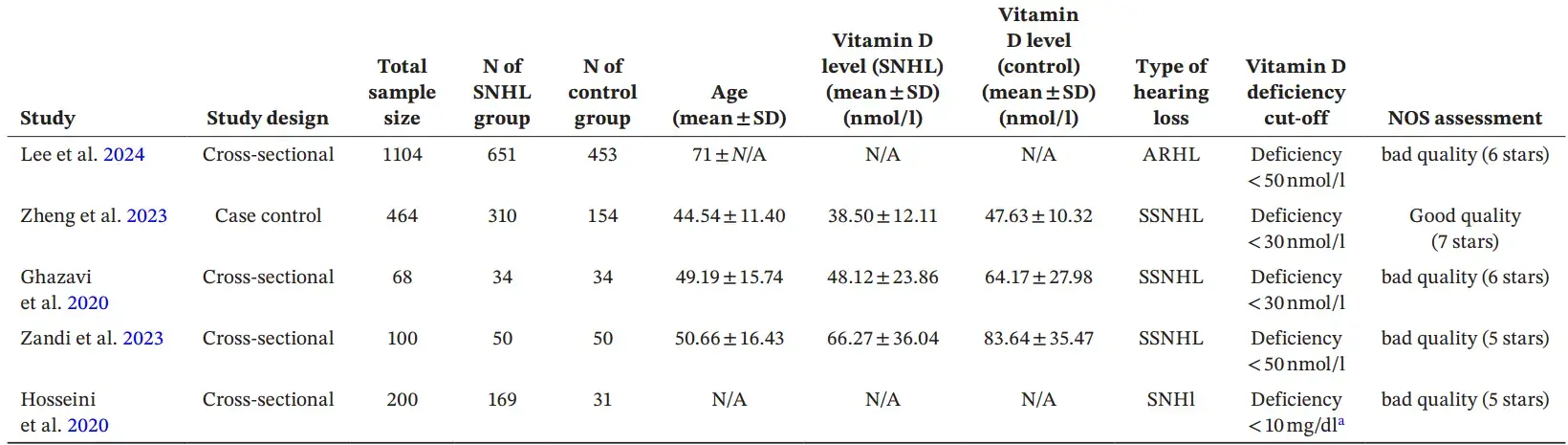
Sensorineural hearing loss (SNHL) is the most common cause of hearing loss. Several studies have explored the association between vitamin D Levels and the incidence of SNHL. This systematic review and meta-analysis aim to assess the association between vitamin D and the SNHL in adult patients.This meta-analysis was conducted according to PRISMA guidelines. A comprehensive search was performed through PubMed, Embase, Cochrane, and Scopus on November 16, 2024, for all studies assessing the association between vitamin D levels and SNHL. The risk of bias was assessed using the Newcastle-Ottawa Scale (NOS). Meta-analysis was conducted using R software, with heterogeneity being assessed by the I2 statistic. Subgroup analysis was also performed.
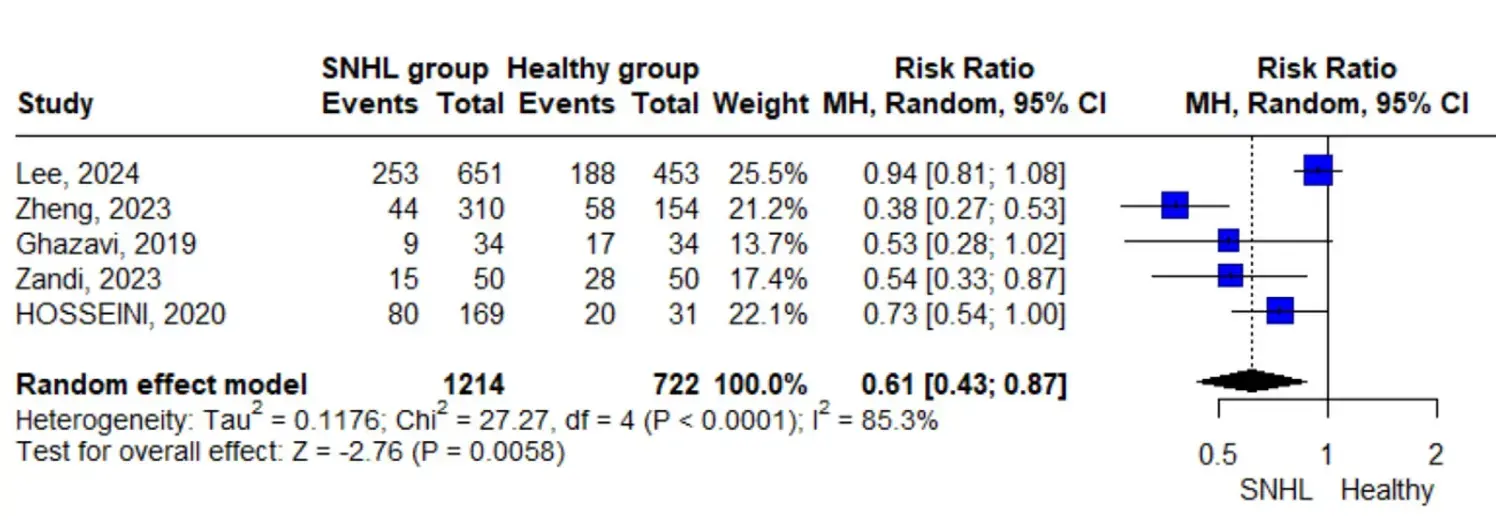
Five observational studies were included, with a total sample size of 1936 and a mean age of 61.9 years. Vitamin D levels were significantly lower in the SNHL group compared to healthy (MD = -9.50, I2 = 16.9%). The incidence of sufficient vitamin D levels was significantly lower in the SNHL group than in healthy (RR = 0.61, I2 = 85.3%). Subgroup analysis revealed a significantly lower risk ratio of sufficient vitamin D in the Sudden SNHL group than in the other types of SNHL. This meta-analysis suggests a significant association between vitamin D levels and the incidence of SNHL. Lower vitamin D levels were reported among SNHL patients. Further investigations are needed to account for the confounders of this association using less biased methodologies, such as cohort studies and clinical trials.
5 Types of hearing loss
| Type | Description | Common Causes |
|---|---|---|
| Sensorineural | Damage to the inner ear (cochlea) or auditory nerve; the most common type (~90% of cases) | Aging (presbycusis), noise exposure, genetics, ototoxic drugs |
| Conductive | Sound is blocked or poorly transmitted through the outer/middle ear | Earwax buildup, fluid, ear infections, perforated eardrum, otosclerosis |
| Mixed | Combination of both sensorineural and conductive components | Chronic ear infections with nerve damage, head trauma |
| Auditory Neuropathy Spectrum Disorder (ANSD) | Sound enters normally but the auditory nerve transmits signals erratically to the brain | Premature birth, jaundice, genetic mutations (e.g., OTOF gene) |
| Central Auditory Processing Disorder (CAPD) | The ear detects sound normally but the brain misprocesses it | Stroke, TBI, neurological conditions, aging |
Quick notes:
- Sensorineural is usually permanent; hearing aids or cochlear implants are the main interventions
- Conductive is often treatable medically or surgically
- ANSD is tricky — conventional hearing aids may help little; cochlear implants often work better
- Vitamin D deficiency has been linked to otosclerosis (a conductive cause) and age-related sensorineural loss — relevant to your VitaminDWiki work