Genistein, a flavonoid, increases vitamin D getting to cells in two ways
Genistein-Vitamin D Receptor Association: Molecular Mechanisms and Clinical Evidence
Overview of the Genistein-Vitamin D Relationship
Multiple lines of scientific evidence demonstrate a significant association between genistein and vitamin D signaling, particularly through direct modulation of the vitamin D receptor (VDR) and regulation of vitamin D metabolism. Genistein, a soy isoflavone phytoestrogen, exhibits complex interactions with the vitamin D pathway that enhance vitamin D's biological effects through several distinct molecular mechanisms.
Direct Modulation of VDR Protein Expression
Genistein directly influences VDR protein levels and activity in various cell types. Research in mouse osteoblast MC3T3-E1 cells demonstrates that genistein treatment upregulates VDR protein expression, and this effect can be completely abolished by the VDR antagonist ZK159222. This finding establishes VDR as a direct mediator of genistein's cellular effects. Notably, the VDR upregulation occurs independently of estrogen receptor signaling, as blockade of both ERα and ERβ does not prevent genistein-induced VDR modulation.[1]
Calcitriol (1,25-dihydroxyvitamin D3) and genistein cooperate to up-regulate VDR protein by increasing receptor stability. This synergistic relationship suggests that genistein enhances vitamin D signaling not only by increasing VDR expression but also by prolonging the receptor's half-life within cells.[2]
Inhibition of Vitamin D Metabolizing Enzymes
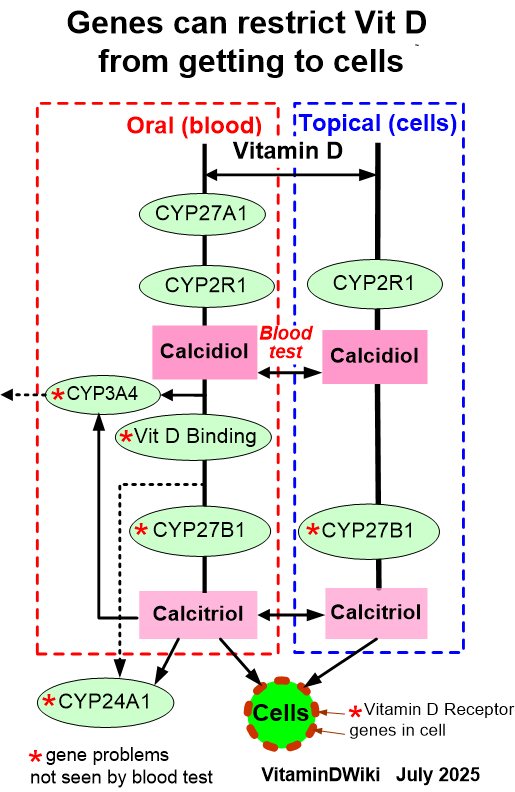
A critical mechanism underlying the genistein-vitamin D interaction involves the regulation of cytochrome P450 enzymes responsible for vitamin D metabolism. Genistein potently inhibits CYP24 (24-hydroxylase), the enzyme that catalyzes the degradation of active vitamin D. By blocking CYP24 activity, genistein significantly increases the half-life of 1,25(OH)2D3, thereby augmenting homologous up-regulation of VDR both at the transcriptional and protein levels.[3][4][5][6]
Additionally, genistein inhibits CYP27B1, another key hydroxylase involved in vitamin D activation. The dual inhibition of these enzymes creates a metabolic environment that enhances and prolongs vitamin D signaling within target tissues. Studies in prostate cancer cells demonstrate that this enzymatic inhibition potentiates the growth inhibitory effects of 1,25-dihydroxyvitamin D3.[6][7][3]
Synergistic Effects in Bone Metabolism
The genistein-vitamin D association shows particularly robust evidence in bone tissue. In osteosarcoma MG-63 cells, the combination of 100 μM genistein and 10 nM calcitriol reduced proliferative cells to control levels while increasing both ERβ and VDR expression. This synergistic action appears mediated through SGPL1 up-regulation and affects cell cycle progression.[8]
Mouse osteoblast studies reveal that genistein promotes proliferation of MC3T3-E1 cells at concentrations of 10⁻⁸ mol/L, an effect completely blocked by VDR antagonists. RNA sequencing analyses demonstrate that genistein induces expression of multiple genes involved in osteoblast differentiation, including Ereg and Efcab2, which enhance osteogenic potential. The compound activates p38MAPK-Runx2 and nitric oxide/cGMP pathways while inhibiting NF-κB signaling to reduce osteoclast formation.[9][10][1]
Clinical studies in postmenopausal women show that genistein supplementation (30 mg/day) combined with vitamin D3 (800 IU/day) and vitamin K1 maintains femoral neck bone mineral density, whereas placebo groups experience significant BMD decreases. Bone-specific alkaline phosphatase and N-telopeptide levels increase significantly in the genistein-vitamin D combination group, indicating enhanced bone formation and turnover.[11]
Prostate Cancer Applications
The genistein-vitamin D combination exhibits promising synergistic effects in prostate cancer chemoprevention. In vitro studies demonstrate that genistein potentiates vitamin D's growth inhibitory effects on prostatic epithelial cells through multiple mechanisms. The combination inhibits intraprostatic synthesis of prostaglandin E2, an important inflammatory mediator, while modulating COX-2 activity and CYP enzyme expression.[12][13][14][6]
A Phase IIa clinical trial in men with localized prostate cancer evaluated the combination of high-dose cholecalciferol and daily genistein before prostatectomy. The treatment was well-tolerated and showed trends toward increased serum calcitriol levels (p=0.08) and increased androgen receptor expression in prostate cancer tissues (p=0.04), suggesting cellular differentiation effects. Immunohistochemistry revealed a trend toward increased TUNEL staining, indicating potential pro-apoptotic activity.[13]
Molecular Signaling Pathways
Genistein affects vitamin D signaling through several interconnected pathways. In breast cancer cells, genistein induces apoptosis through calcium regulatory activity that involves phytoestrogen interactions with receptors similar to VDR. The compound modulates the PI3K/Akt pathway, which cross-talks with vitamin D signaling to regulate cell proliferation and differentiation.[15]
In immune cells, vitamin D mediates its anti-inflammatory effects through VDR, and genistein appears to augment these responses. The combination of genistein and calcitriol mitigates hyperosmotic stress-induced inflammation through VDR-dependent mechanisms.[16]
Clinical Safety and Efficacy
Multiple clinical trials confirm the safety of combined genistein and vitamin D supplementation. A 24-month study in osteopenic postmenopausal women using 54 mg genistein plus calcium and vitamin D3 demonstrated favorable effects on cardiovascular risk markers without adverse effects on endometrial thickness. The treatment increased serum osteoprotegerin levels and showed positive correlations between genistein plasma levels and beneficial metabolic markers.[17]
The combination of genistein with vitamin D and other nutrients (omega-3 fatty acids, vitamin K) has been shown to be well-tolerated with no significant differences in adverse events compared to placebo groups. Gastrointestinal side effects represent the most common treatment-related events, occurring in 19% of genistein recipients versus 8% of placebo recipients.[11][17]
Conclusion
The scientific literature provides substantial evidence for a multifaceted association between genistein and vitamin D signaling. Genistein directly modulates VDR expression, inhibits vitamin D-degrading enzymes, and synergistically enhances vitamin D's biological effects in bone, prostate, and other tissues. These interactions have been validated in cellular models, animal studies, and human clinical trials, supporting the therapeutic potential of genistein-vitamin D combinations for conditions including osteoporosis and prostate cancer. The mechanisms involve direct VDR regulation, enzymatic modulation of vitamin D metabolism, and integration with multiple signaling pathways controlling cell proliferation, differentiation, and apoptosis.
1 2 3 4 5 6 7 8 9 10 11 12 13 14 15 16 17 18 19 20 21 22 23 24 25 26 27 28 29 30 31 32 33
Related in VitaminDWiki
- Genistein increases the vitamin D getting to cells, not the vitamin D level in the blood
- Genetics contains