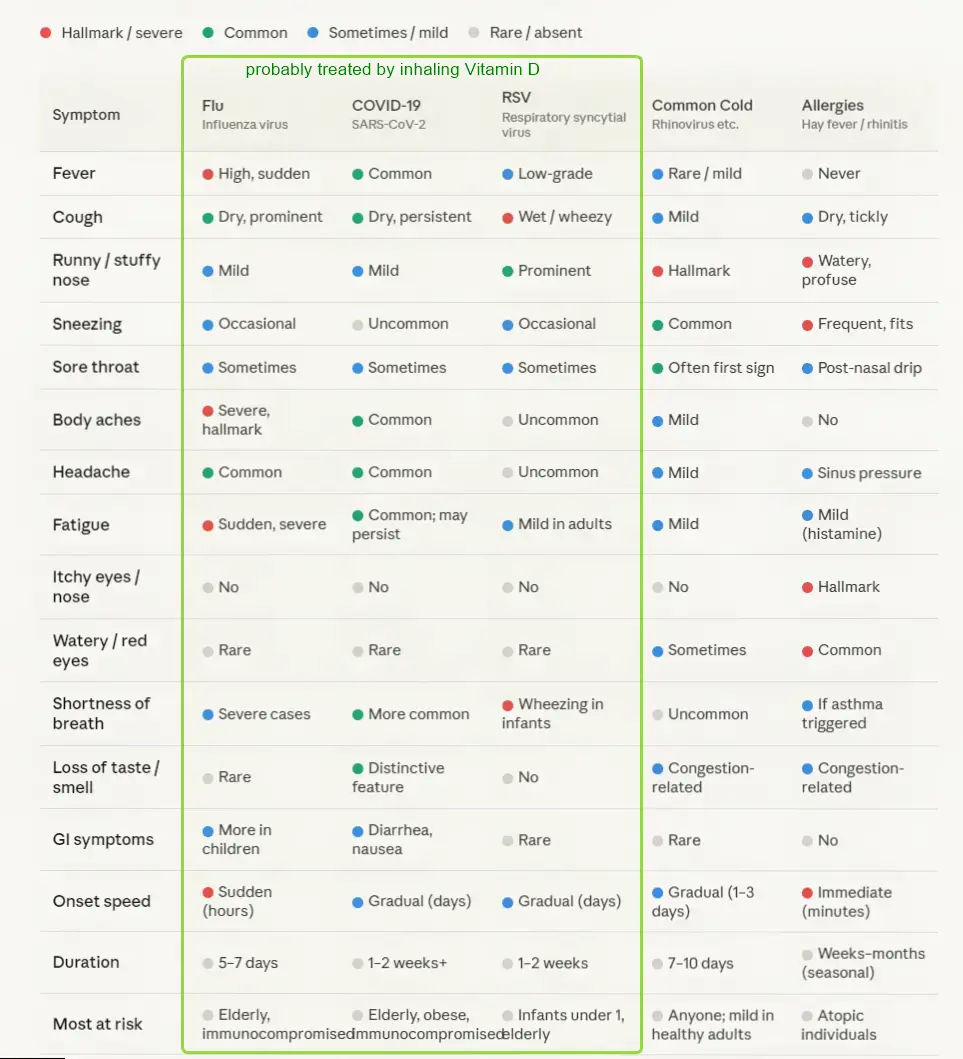
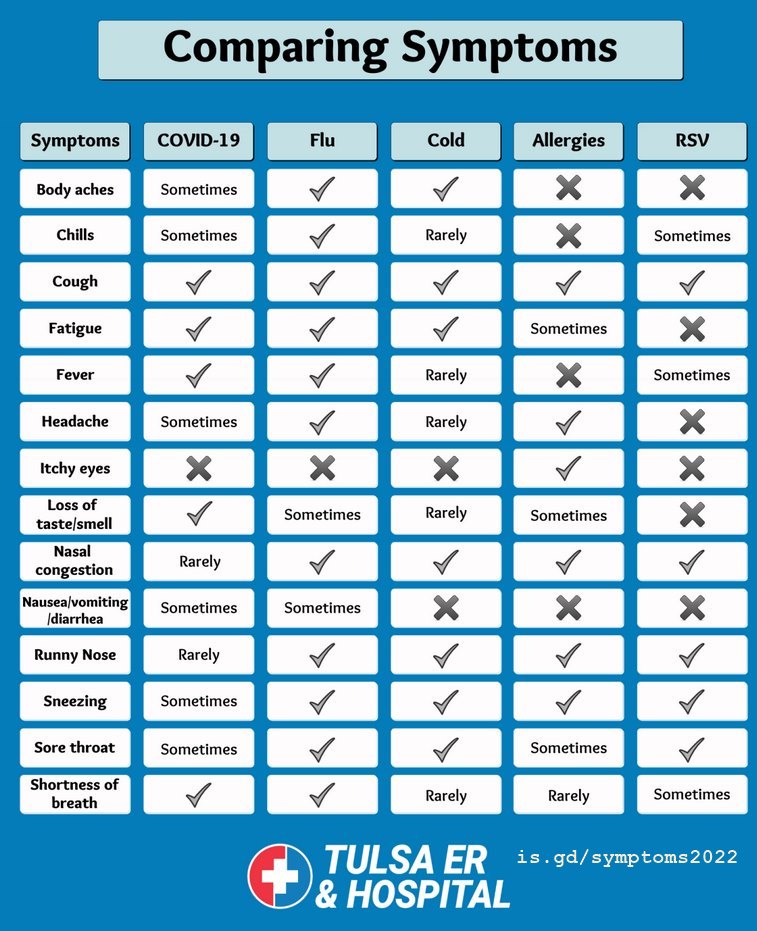
Flu is the easiest to distinguish by its hallmark sudden, severe onset — you feel fine at noon and wrecked by dinner. The body aches and high fever are characteristically more intense than the other two.
COVID-19 is the most variable of the three. Loss of taste/smell was highly distinctive for earlier variants (Alpha, Delta) but is less prominent with Omicron-lineage variants. Prolonged fatigue ("long COVID") is a unique risk.
RSV is primarily a respiratory illness of the lower airways. In healthy adults it resembles a bad cold, but in infants under 6 months and the elderly it can cause bronchiolitis and significant wheezing — the wet, labored breathing is the giveaway. The prominent runny nose early in the illness is also characteristic.
Common cold sits between flu and allergies in severity — it shares many flu symptoms but everything is milder, builds gradually rather than crashing in suddenly, and notably lacks the severe fatigue and high fever that define the flu.
Allergies are the easiest to distinguish once you know the tells: itchy eyes and nose, immediate onset (minutes after exposure), and the complete absence of fever. The watery/profuse nasal discharge tends to be clearer than the thicker mucus of a cold or RSV. Duration is the other giveaway — symptoms persist as long as the allergen is present, often weeks or months, rather than resolving in a week or two like an infection.