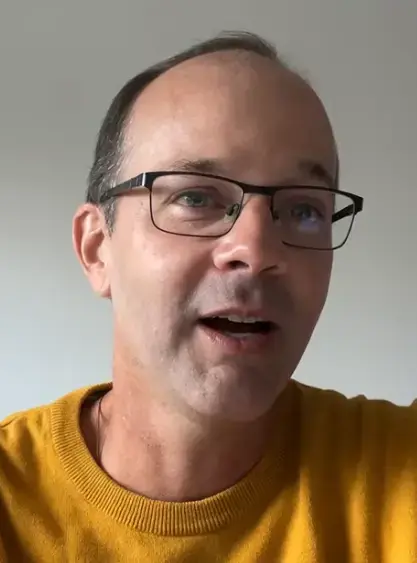
01:32 - Initial Symptoms & Diagnosis: Ricardo Garcia describes his first multiple sclerosis (MS) symptoms in 2004, which consisted of numbness and tingling from the waist down. He was officially diagnosed following spinal cord and brain MRIs.
05:15 - Traditional Treatment & Side Effects: A specialist advised starting medication immediately to prevent rapid progression. Ricardo chose Avonex (taken via weekly injections) but experienced severe, debilitating flu-like side effects.
09:25 - Misdiagnosis and Second Relapse: Two and a half years later, a doctor told Ricardo he didn't have MS and took him off the medication. He lived symptom-free until a high-stress period planning his wedding triggered a definitive second relapse.
13:05 - Discovering the Coimbra Protocol: Seeking an alternative to traditional drugs, Ricardo moved back to Brazil and joined a local MS association. There, he witnessed patients experiencing dramatic mobility improvements using Dr. Cicero Galli Coimbra's high-dose Vitamin D protocol.
60K IU daily at start, peaked at 130K IU daily - often 500 ng/mL
14:07 - Extreme Vitamin D Dosing: Ricardo began the protocol at 60,000 international units (IU) per day, eventually peaking at 130,000 IU daily. His blood levels of vitamin D sit between 450 and 600, requiring labs to dilute his samples to get an accurate reading.
Avoids all forms of Calcium
16:03 - Critical Dietary Restrictions: Because massive doses of Vitamin D open a "gigantic gate" for calcium absorption, Ricardo must strictly eliminate dairy, nuts, and blended green juices to avoid toxic calcium buildup and potential kidney dialysis. He also drinks massive amounts of fluids daily.
Completely relapse-free with zero negative side effects.
17:47 - Remission and Current Health: Ricardo has been exclusively on this protocol for 11 years and has remained completely relapse-free with zero negative side effects. His current Canadian neurologist monitors him but advises him to keep doing what he's doing.
30:24 - Financial Comparison: The cost of Ricardo's entire vitamin and supplement routine is about $600 per year, which the host notes is a stark contrast to traditional MS pharmaceutical treatments that can cost between $60,000 and $100,000 annually.
35:51 - The Power of Mindset and Lifestyle: Ricardo emphasizes that accepting the disease rather than fighting yourself is crucial. Alongside the supplements, he maintains his health through daily meditation, swimming, running, and taking proactive ownership of his medical research.
Raw Transcript
(00:02) I'm almost 50, strong, clear, energized. Training hard, living clean, fully alive. But it didn't start here. 30 years ago, I was diagnosed with multiple sclerosis, and I felt hopeless. But I chose a different path. No meds, just science, discipline, and results. Now I'm symptom free and asking the tough questions that move us all forward.
(00:30) This is Hope and Health. Let's go. Hello and welcome to Hope and Health. Today I'm talking to Ricardo Garcia, who is a Brazilian born father, runner, advocate, and who's lived relapse-free with multiple sclerosis for the last decade thanks to a protocol that involves high dose vitamin D.
(00:55) Ricardo, thank you so much for joining us today. Now, you're born in Brazil, but now you're living in Canada. You've been diagnosed with multiple sclerosis. Thank you so much for sharing your story. Thank you, Mat. It's a pleasure to be here. So, let's go back right to the beginning. Can you share with us the story of how you were diagnosed, the symptoms you had, and what decisions you made to treat your disease? Absolutely. So, the diagnosis came in 2004.
(01:32) At the time, I was living in Texas in the US. I was getting my I was just finishing my under graduate in in Austin, UT Austin, and then I had a numbness from on my right side from about my waist down on my right side, you know, numbness and tingling for about a week. And then I was lucky enough to go well if it was a prolonged symptom.
(02:07) I went to just a physician and luckily she was humble enough to say to send me to a neurologist and not try to you know fix me right then she said I don't know what you have quite honest I think you should see a neurologist and that led you to the diagnosis. So at that time you've got these you know objective symptoms you know your whole sides I mean it's very similar what happened to me I suddenly had a feeling on one side of my body for me it was a a combination of numbness and hyper sensitivity you have these things going on what's the first thing you're thinking do you think you have a brain tumor do you think you've got a slip
(02:41) disc what's going through your mind No, actually I didn't think much of it because you know I had the numbness for about a week tingling and then I went to the doctor a week later it was gone so I didn't have anything else and I didn't do anything for it and because it takes time to get to get to a specialists right? So I you know I set it up the appointment for the first that came up and as I was waiting on the waiting room I picked up a pamphlet about MS and I started reading about it just you know because it was there waiting And then he came, he tested, you know, did some
(03:22) sensorial tests and then sent me for a spinal cord MRI, and then, you know, a week later, I got a call from the nurse saying that the doctor actually wants you to do another MRI now for the brain, but didn't give me anything else. It's like, so what is this about? What's going on? So I went back had an MRI for the brain and sometime later I got a call from the nurse not from the doctor and then she says yes your diagnosis came back and you have multiple sclerosis it's you know it's a disease that doesn't have any cure and it's going to be with you for the rest of your life. So you're diagnosed with multiple sclerosis now. What did you know about the disease prior to the diagnosis? Nothing. Knew nothing. Nothing at all. I had no idea what it was. So after the diagnosis, did they explain to you what's going on with your body? What's likely to happen? No, I was I was left out to the luck, you know, of finding it all about it on my own.
(04:34) Basically she said just that you know it doesn't have any cure and it is for the rest of your life. I mean it was shocking. I was I was in my 20s and it was it was devastating. You know. I was at work. I still remember when I got that phone call. But then after that, you know, I my brother lived in Texas as well and we went I decided to go and see another two more doctors. The second doctor had me do a spinal tap which came positive as well.
(05:15) And then the third doctor is the one that I decided to follow at the time because he his specialty was MS. And he said on the first consultation, my brother followed me at that time, right? Because he was there with me as well. And he said, "I actually don't know if you have MS cuz you only had one relapse, right? And you know, but I would, you know, you have everything that sounds like MS, looks like MS, I would recommend you started the medication because in a matter of 15 years, it could make a difference between a wheelchair and a cane.
(05:53) His words and then well that time I said well it's a no-brainer let's do it and then he gave me three choices this is in 2004 so he says he was actually said you know we're in the golden age of MS. Okay the golden age of MS 2004. yeah right believe it or not they said you know we have many other options than 20-15 years before so he gave me Rebif he gave me Avonex and he gave me Copaxone. Okay so let me get this straight. Let me stop you there and walk this through.
(06:27) So, you're diagnosed with the disease you don't know much about. You're not told too much about it. And then you're given a menu of drugs that are going to, I guess, hopefully keep you out of a wheelchair in 15 years. How do you decide? Yeah, that is that is absolutely correct. At that time you know I had had the time to do a lot of research about it but again we go to internet back then there was limited resources, well actually a lot of resource because we had Google had internet to go to right but you see you see just the extreme cases so I was I was really frightened
(07:04) with the aspect of it, but I you know it's important to say this this what I'm going to tell you now Mat will later on plays to my diagnosis on why I think I'm relapse free for this long is that from the beginning I accepted the diagnosis. I accepted that I have a disease that is going to be with me for the rest of my life.
(07:35) And I didn't I didn't ask why me, you know. I didn't question it. I didn't I wasn't mad. I wasn't upset. I just accepted, okay, is this what it is? How do we go about it? What can I do about it? Right? And the options were the three medicines. I just choose the one once a week cuz I I hate shots. And then I went I went with Avonex once a week. Okay.
(08:02) The side effects were horrible, right? I had one day of my life of my week that I would be in bed pretty much. you know, I prepped myself. I had the shot. I’d take two Tylenols and I go to bed with you know covered in clothes and sweatpants, sweatshirts and three blankets over me cuz I knew I would wake up 2 in the morning shaking with you know like flu-like symptom right with a fever. So it wasn't a good experience.
(08:31) So to be clear, you you're diagnosed with multiple sclerosis. You're again you're given a menu of drugs. You start on one of them and you start experiencing some pretty severe side effects. At what point was it worse than the disease? Yeah. But then I had no choice, right? And it was that and or not? In the beginning, I wouldn't go to work.
(08:55) The next day when I take the medicine, I usually would take on Friday so that Saturday stay in bed. But you know slowly the body would adjust to it and you know after one year or you know it was I wasn't feeling as bad. It was still pretty bad but not as bad. And in 2 and 1/2 years later, I went back on my regular consultation and he said, "Ricardo, I don't think you have MS.
(09:25) " Because two and a half years later, I'm on Avonex and I didn't had a second relapse. I only had one relapse. It's important to say that on my on my first MRI, it showed a lesion on my on my cervical cord. A big lesion but my brain didn't have many lesions not compared to a regular MS patient which had lots of spots. So what I now turn to is luckily for my luck the lesion was big enough to give me a symptom.
(10:00) So it was early I was diagnosed early because of a a big lesion that led to the symptom. Yeah. And that can be really problematic because a lot of people it takes a long time for them to get that diagnosis. So without the diagnosis you can't change gear so to speak. Absolutely. That is correct.
(10:23) So now you go back two and a half years later and they tell you don't have MS. He says I think you had some sort of brain disease that developed as MS. So stop Avonex, just monitor once or twice every year and and go live your life. It was one of the best days of my life. What happens next? And I just did what the doctor said and I stopped the medication completely obviously and I went on living my life. Destiny took me back to Brazil.
(10:55) I lived in the US for 10 years and then I went back to Brazil. I met my wife and funny enough during our wedding planning it was a moment of very high stress and then I sure enough I had my second relapse. Oh no. So what happened? I knew what it was already, so I said okay I have MS. I had a neurologist that I had found when I went back to Brazil.
(11:28) I chose to follow me like, you know, keep track of the disease. And then I went to him. We had an MRI and sure enough, I had active lesions, and here comes the confirmation. I went back to Avonex just because I knew what it was. I already he said, you know, we can just go back to Avonex. There are options right now, but you know what it is. I don't want to go in the pill or anything else.
(11:56) So, I went back to Avonex, but this time I wasn't I wasn't ready for the side effects and everything else. I said, you know, I'm going to try to find an alternative for this. I don't want I don't want this this anymore. Okay. So before we go into looking at a different treatment, what was it like to have been told you don't have multiple sclerosis for years to pass for you to move on with your life? You meet your wife, you're engaged, you're planning a wedding, and suddenly MS comes back, the symptoms come back, and now you're told you have MS. A second hit. What's
(12:38) it like? It it's a fair question. And it's a good question, but to be honest, I accepted MS ever since the beginning. So coming back and saying that yes, you actually do have it and it's back again. It wasn't much of a shock as it was the first time. I just, you know, I already knew what it was.
(13:05) This time I was there was the willingness to find an alternative and I think that was key to looking for it. So I joined the MS association in Natal. This is Natal's northeast to Brazil right next to the equator. It's 20-30° every the whole year around. I started seeing other people who were taking high doses of vitamin D and the protocol from Dr. Cicero Galli Coimbra and they were doing really well. So I liked what I heard. I invited a few of them at home to that dinner and talk tell me more about it. One of them had been taking it for more than seven years. Okay. So I'm going to stop you right there. So for people who don't know much about this, it's a high, it's a protocol of high dose vitamin D and we're talking high dose. Correct? I mean correct what kind of doses are we talking about here? All right.
(14:07) So I started at a 60,000 international units per day. 60,000 per day. And to give people a perspective, I believe the recommended dosage is between 500 and 1000. Correct? Yeah. From regular doctors, that's yes, that is what they will say. So this is, from a regular doctor, they're saying between 500 - 1000 I believe, international units. You're taking, you're open to taking 60,000.
(14:35) So 60 times the recommended dose for vitamin D is the protocol. This is what I started at. It's not where I stayed. Okay. I went as high as 130,000 per day. 130,000 international units of vitamin D per day. This is enormous. So why did you take this risk? I mean there I mean you can overdose of vitamin D. I believe. Absolutely.
(15:03) It's fat soluble, correct? So it will... it yes call [unintelligible] Yes. So it these are huge doses. Why did you feel confident doing this? Okay. So here's the reason why I went I went in it. So first I went I went to see the doctor right when I I needed to to talk to him. So I flew to Sao Paulo. Back then there was no virtual consultations.
(15:33) So I flew to Sao Paulo to see him and had a consultation. He has been doing this for more than 10 years at the time with very high success rate. So to put it in a perspective, the biggest side effect of such a high dose of vitamin D is, and this is what you need to to watch for is, your calcium intake. Because when you take these high doses of vitamin D, it opens up the gates of absorption.
(16:03) Calcium absorption in your system. So, I would go from living normal to a dialysis, you know, if I didn't watch my diet on the calcium intake because there is no it's like for instance an a regular person absorbs about a little window, think of a house, a little window of calcium that goes in the system.
(16:36) When you take this much vitamin D, it goes from a little window to a gigantic gate of absorption. So you have to limit the calcium and you have to drink a lot of fluids per day to compensate and dilute the calcium in it. But the main reason I decided to undergo this was seeing the improvements on my friends from the association. So you'd seen people with multiple sclerosis who started this high dose of vitamin D protocol and you saw them improving.
(17:15) There were people that used to be on a wheelchair that was now on a on a a you know a walking machine. A walker. Yeah. A walker. Yes, exactly. There were people that used to dance that stopped dancing because of went back dancing. People who were on a cane that didn't have a cane anymore. So I said, you know, this is enough empirical evidence for me to embark on this.
(17:47) And I completely stopped Avonex and anything else and went exclusively on vitamin D for the last today 11 years. Wow. So it's 11 years later since you started this high dose of vitamin D protocol and no relapses. No relapses ever since. to give an idea of my level of vitamin D in my system right now. if you go to test for vitamin D in your system, the lab, the machine in the lab goes as high as 120.
(18:23) 120 it'll tell you that you have OD of vitamin D, right? You overdose on vitamin D, you should be in hospital right now if you hit that level. 120, 150 in some cases. In my case, I have to tell the lab that I I do take high dose of vitamin D and ask that they dilute my sample. So what they do is they put my blood into the machine, if the machine hits, let's say 150 for simplicity, hits 150, they dilute it, put it again, it hits 150 again. So I'm at 300.
(19:02) And they keep on going until they get less than 150. They add it up and gives my level. My level of vitamin D today is between, it varies between 450 and 600. So that is if my calculations are correct almost four times what should be allowed to be a healthy person. Exactly. So your vitamin D level is that high. Do you have any negative side effects for having your vitamin D that high? None whatsoever.
(19:33) All I have to do is watch my calcium intake which is not easy because nowadays even bottled water has added calcium into it and I need to drink lots of fluid every day. And what about your multiple sclerosis? No signs of it. I walk normal. I you know I had no nothing. And I nothing of the symptoms that you could say that of an MS patient. I don't have it.
(20:02) I live a normal life like anybody else. Now, does your doctor think you're crazy? My neurologist here...yes. He, well here in Canada, right? When I went and I, you know, let them know that I had MS and I should be seen to be in the system as an MS patient. He said, "Honestly, I I don't know what you're doing and but who am I to say that what you're doing is wrong because clearly you're doing well and you'd be doing this for 10 years. So all I have to say is keep on doing it.
(20:41) Let's have an MRI so that you have an MRI here in Canada in the system. But as far as I'm concerned, I have nothing to say." Now, I've looked quite a bit actually into this protocol that comes from Brazil. Is it the Coimbra protocol? Is that how it's pronounced? The Coimbra? Yes, the Coimbra protocol. Yes. Dr. Cicero Galli Coimbra is his last name. Yeah.
(21:03) And for people who are interested, I know there's lots of videos online and testimonials about this. Now, correct me if I'm wrong, there's also a nutritional piece to this protocol. Yes, there is the nutritional piece there are a few elements to it. The most important part is that you limit your calcium i
(21:33) ntake because of the high absorption you cannot... limit calcium intake let's let's translate that is basically I make it easy for people when I'm go to a restaurant so I say you know I'm dairy allergic. Right. So no dairy whatsoever no cheese no milks, no yogurt, any dairy that is derived from milk. But not only that, also nuts. I cannot eat nuts because they're rich in calcium.
(22:06) Northeast of Brazil, there is a fruit called pitanga which is very rich in calcium. Acai is very rich in calcium. So you know the green juice, right? when you centrifugate all of the vegetables and especially I can't eat that, because I can and I should eat green vegetables raw but once it goes through a blender it releases a lot of calcium and I can't take.
(22:42) But I do eat well so this is basically what I need to watch for along with the vitamin D I also take like you know what is it fish oil, high dose of fish oil, other supplements that help because the vitamin D the cholecalciferol. it has to transform from the inactive form to the active form and then it converts into this into our systems. So, I take a little supplements to help on that changing from inactive to active.
(23:20) And then you could say if I were to take active form, I would need a lot less of vitamin D to to do it. But it's very hard to manipulate, to manipulate the levels of an active vitamin D when you put it in your body. So, it's very dangerous to do that, instead you know I take the inactive and these other supplements to help it convert into the active form.
(23:50) The theory behind is that because the vitamin D is a natural immune regulator of our body that if you take these high doses eventually it will help the system auto-regulate and tell, you know, my white cells that my neurons are not the enemy anymore and stop attacking our myelin, so that's that is the process, and I actually I asked Dr. Cicero one time, I said, "Have you ever had somebody in a patient that actually was started on your protocol and achieved your goal?" and he said, "I have one patient that is very close to getting there." And I said, "So, what what's his trick who is patient?" and said, "Well, he's a monk." Right. So stress is our worst enemy, right? For any anyone with MS.
(24:59) So if you know, so that makes sense that the monk is actually getting it under control. You know for our audience, it's going to be it's going to be a hard cell to convince most MS patients to go to a monastery, but they may be open to taking high dose vitamin D. So, for anyone who's interested in this, I mean, and I'm actually quite curious, how are you getting such a high dose? Like, what are you taking? Are you taking pills? Are you taking drops? I mean, you can get it from being outside, but you'd have to be outside all day. Yeah. Have you have you heard of a company called I-Herb? No, I haven't. You have not? I-Herb. Oh, interesting. I-Herb, I as in India and H-E-R-B I-Herb. They're based in the US. They sell lots of supplements and vitamins. And you can buy 50,000 IU pills for vitamin D. Got it. Just in one pill.
(26:08) So I take 10,000 I take today I'm back to 60,000 the dose that I started with and oh the other thing important thing too is you need to monitor right your level of the calcium in your system and the vitamin level. So every so often once, twice a year I need to go for tests to monitor that make sure that everything is okay is correct and that's when Dr. Cicero adjust the level of vitamin D. Now, I mean, it's not all you're doing.
(26:36) So, you've got the high dose vitamin D. You're watching your nutrition and part and part of the MS Hope protocol or, you know, some of the things we, I talk a lot about is dairy free. We know milk can be a big issue for multiple reasons for people with MS. But you're also exercising, you're running. Tell me about that.
(26:57) How big of a part is exercise play in your program? Yeah, exercise is, it has become recently more of a part of me. I do I like to exercise. I like to swim quite a bit. I run I did a one time was in the US and they do a half a marathon with my wife in in Rio and when we train for that and practice and it's and especially the extreme temperature is hard on MS right so either too cold or too hot is not good. So living in Natal which is where is very hot all year round.
(27:42) This is something that I have to watch for too is there the body in the heat. So I'd have to train early in the mornings to avoid the heat as much as possible. But it's you know it, I do exercise some more now and I love to be in the water as well. So swimming is a big part of it. Now, can we talk a little bit more about the MS community that is around the Coimbra Protocol? Because I know out there if you if you people are going to the internet, they're going to and start researching this and just Google if who's ever watching Google this right now. You're going to find a lot. So, the it's hard for people to know who to trust, where they're getting solid information. Would you recommend going directly to the clinic? Yes, you can. Absolutely. Dr. Cicero has ever since for the longest time he started training more doctors on the protocol to follow it because he can't... he wasn't able to cope with the demand.
(28:49) So now he has a team of doctors and he treats doctors from all over the world to go with him and spend time with him and then you can see one of the doctors you can follow the website it's called vitamin vitaminadporumaoutraterapia. And again I want to be very clear to our audience that we're not recommending this this is not an endorsement of the protocol we are just bringing awareness for people to learn more about this.
(29:24) And if you are going to investigate, please consult your doctor to make sure everybody's on board because there clearly regular testing, monitoring, all these things are really important. But again, trying to open people's minds up to other options that are out there. For me personally, I try to get a lot of it naturally, but I do try to take I mean I guess the doses I take up to 10,000 international units a day, which is still almost 10 times the recommended.
(29:52) Almost 30 years into my journey, things are going well. To dive into a little bit on what you mentioned there, Mat on 10,000. So Dr. Cicero says on just from the sun if you have a white skin like mine and yours and you have body exposure and you are along the tropics you could you would synthesize 20,000 international units of vitamin D in 15 minutes 15, one, five.
(30:24) So just being outside with your say in a bathing suit you're looking at 15,000 you say 20,000 or 15,000? 20,000 you would synthesize 20,000. So what he says that everybody in the whole world should you know can take 10,000 without diet to get the level to normal. What is the cost like for someone who wants to explore this? It's very minimal Mat, quite honestly, what I spend in vitamins, not only vitamin D, but all the other supplements that goes along with it it’s about $600 per year, give or take.
(31:04) So, it's, you know, comparatively with, you know, other medications that is out there, it's very cheap. So, $600 a year for the high dose vitamin D you're taking. To put that in perspective, the drugs that are recommended for people with MS can go between $60,000 to $100,000 US. So, this is a minimal cost for this vitamin.
(31:36) You know, why do you think we're not hearing more about this? I guess you nailed it right there with your statistics. It's, you know, it's the big pharmaceuticals, big interest groups that, you know, doesn't want to make this available. Dr. Cicero himself is being chased. Just like yourself, you when you went out and start speaking about it, you know, it's there are a lot of interest groups, a lot of people with big fat checks that doesn't want to change anything. Yeah, it's a problem.
(32:13) And you know, I've been advocating for vitamin D for over a decade now to get this information to people. There's hard science that supports vitamin D's role in multiple sclerosis, also for prevention, making sure that young people kids are having adequate vitamin D in hopes of staving off an MS diagnosis. for you and your kids, your family, you've got a family.
(32:38) Do you have them on the protocol? And what do you do? Yes, I do. I give them my kids as followed by Dr. Cicero says it's 1,000 international units per 5 kilos every 5 kilos. So my kids are they have they weigh about 20 kilos - 25 kilos. So I give them 5,000 international units in drops for them is like drops it has no taste.
(33:15) So I don't I do it every like three times a week and when we go back to Brazil when we do our annual reviews you know I monitor for that and their levels are around you know 80 - 70 between 70 and 85 as the time I measured. So yes the family takes it vitamin D too, my wife also takes it 10,000 almost daily. Now, in your journey, you've been you've gone through quite a bit, two MS diagnoses.
(33:43) You've been on a drug that caused significant side effects for you, and now you found a path through vitamin D. Does it frustrate you how long it can this process can be to find the solutions you need? It does. Yeah, it is. It is very frustrating for sure. But luckily to nowadays it's a lot easier to find alternatives. You know back when I was diagnosed I spent a lot of time in the library because you that's where you would go for sources.
(34:13) You know I'd go there to do research on my papers that I had to do for school. So I I'd also spent quite a bit of time there with the library doing some research on MS. The internet was indeed coming up. It has a lot of information there, but it's hard to filter what is good and what is not.
(34:42) And it's a lot easier to find the negative side of MS than the positive side. So that's why I'm very happy that you are out there advocating for alternative. I follow your program. I watched all the videos with all the people that you do, Mat, and it's a different reality nowadays. If somebody who has a MS and who is willing to go a little beyond what the neurologist tells them, they can find a whole lot different perspective for MS.
(35:21) You know, so many of the people that I interview for our podcast are who I meet in real life who are finding, you know, great outcomes for themselves and living life to the fullest and being able to be a father and being able to live the life that they want to running half marathons. I mean, whatever the dream is, being able to fulfill it. One of the key words I hear over and over again is research, that they themselves had to put in the time that they didn't get all the information from their doctor. Can you talk about the importance of taking the control of your own disease by getting the information you need? Absolutely. That goes into It's funny because it also relates to immigration like my path to immigrate to Canada from Brazil. It was only when I took matters into my hand to do the research much like I did with MS that I was able to make smart decisions about my future in the immigration path.
(36:32) So it's you it's my life and nobody else knows how it is and what I'm feeling or I'm going through than me, you know, even my wife or or anybody else who's close to me does not know what is it like? I think the attitude towards it, it's it plays a big role. It's the mindset that I took on was that it doesn't matter. It happened, right? I have a MS. Fine. So, how it now it's up to me to live with it and accept it.
(37:04) And acceptance I think is a big part of of being able to keep it under control because when you don't accept your destiny for whatever reason that you have it doesn't matter how whatever belief you have it it's you start to fight against yourself you know so you have the disease that is already it's autoimmune so it's me fighting with me myself. Right.
(37:37) And if I take that to the level of my mind and that I don't I keep on struggling in then it just becomes worse. I completely I believe the biggest battle you're ever going to have is with yourself in the mind. Mindset is another word that keeps coming up with people who have positive outcomes.
(37:57) And what I love to do is to learn more about what do people do specifically to keep that mind in a positive place? I mean, we hear think positively. Well, you've got to do more than that. You've got to figure out a way to keep that mind in that for you. What are some of the strategies, the day-to-day things that you do to keep that positive outlook? I I meditate. The exercise is a big part of it.
(38:21) Meditation and just looking at life in a positive attitude and way it is not not only for me but I teach that to my kids. So, so every time they have something that doesn't go as they thought it would, then you know we'll go back and said okay but what was it what was good on that bad side effect just recently you know they had experience and they and then I try to teach them that for every bad there is always a good side of things. So I I'm always trying to keep a positive perspective.
(39:01) you know meditation has helped me a lot. Exercise no doubt, a loving family that supports me all the way you know it's there is no doubt about that. All my extended family since the diagnosis now you know for the past 10 years with my wife and it's yeah it's that's that has helped a lot for sure.
(39:29) Yeah, I completely agree and in my journey and one idea that I really try to share is, you know, once you can honor the bad times as much as you honor the good times, you're free because you realize that everything has led you to the point you are and that forgiveness comes with that of yourself, of others, and you can continue on a path upwards. Has MS been a gift for you in your life? Wow. I think so.
(39:57) I have I have been gifted with if there is anything that if you could call MS I have a benign type of MS because remember I only had two relapses in 20 years and it's uh it has given me a way of life that perhaps I wouldn't have it if I didn't have it if I didn't it's it gives me an extra stimulus to look for a better way to live life and look things in a different perspective. So yes, I would say so.
(40:29) Yeah, benign isn't benign MS the goal? Like if we didn't have benign MS, why would we be talking about these strategies? True. Yeah, very true. I always tell people say, "Oh, you have mild MS." I'm like, "Well, that's the point. Like, if I, you know, if I didn't, then I shouldn't be out there sharing some of the strategies that we do." Thank you again for sharing your story. Thank you, Mat. It's a pleasure.
(40:54) Thanks for joining us. Hope and Health is made possible through generous donations. To learn more or support the show, visit MSHOPE.com where you'll find free, science based resources."