Most Pregnant Women in Mediterranean Are Vitamin D Deficient
Title of Medscape Multispecialty
Reporting on Hypovitaminosis D in pregnancy: can the Mediterranean paradox be explained? A systematic review
Talk was presented at 17th European Congress of Endocrinology – May 2015
Spyridon Karras1, Stavroula A Paschou1, Eleni Kandaraki1, Panagiotis Anagnostis1, Cédric Annweiler 2,3, Basil C Tarlatzis1, Bruce W Hollis 4, William B Grant 5 & Dimitrios G Goulis1
1Unit of Reproductive Endocrinology, First Department of Obstetrics and Gynecology, Medical School, Aristotle University of Thessaloniki, Thessaloniki, Greece;
2Department of Geriatric Medicine, University Hospital, Angers, France;
3Department of Medical Biophysics, Robarts Research Institute, Schulich School of Medicine and Dentistry, University of Western Ontario, Ontario, Canada;
4Medical University of South Carolina Children’s Hospital, Charleston, South Carolina, USA;
5Sunlight, Nutrition, and Health Research Center, San Francisco, California, USA.
Introduction: Despite high levels of sunshine, maternal hypovitaminosis D during pregnancy is prevalent in the Mediterranean region, consisting a paradox. The aim of the study was to systematically review trials that investigated vitamin D concentrations during pregnancy in this region, in order to determine predictors of hypovitaminosis D and explain the paradox.
Methods: After applying inclusion/exclusion criteria, 15 studies were entered into the systematic review, involving 2649 pregnant women and 1820 neonates. The main outcome was maternal vitamin D concentration. Possible predictors of the outcome included study, maternal and neonatal characteristics (
age,
BMI,
race,
socioeconomic status,
skin type,
gestational age,
sun exposure,
calcium and vitamin D intake and supplementation,
smoking status,
parity,
season of delivery,
pregnancy complications).
Results: Studies differed widely in vitamin D deficiency criteria, methods of measurement and outcomes.
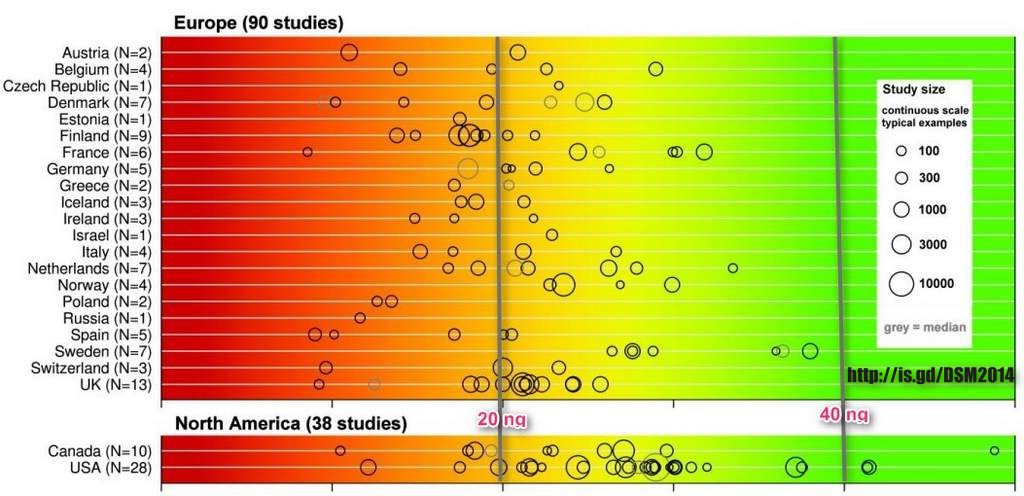
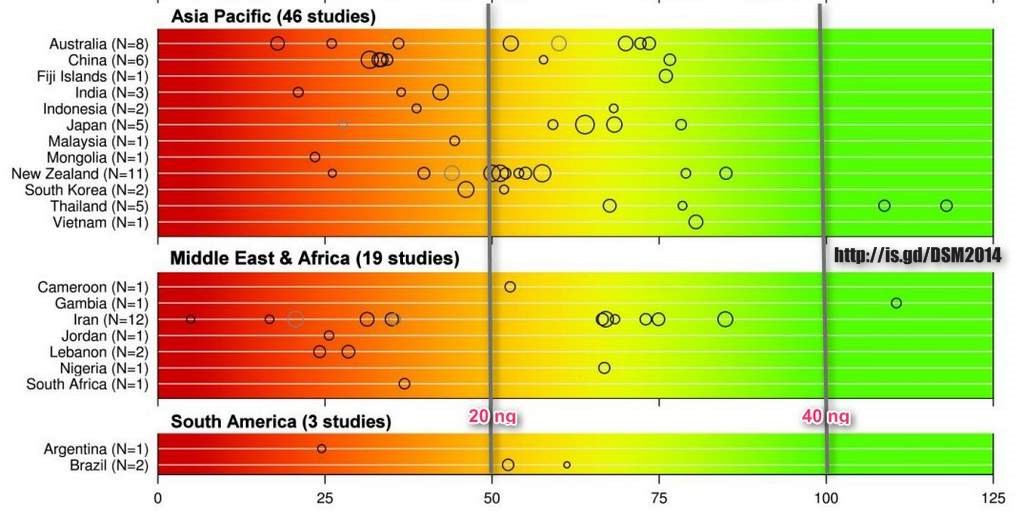
However, prevalence of maternal and neonatal hypovitaminosis D was up to 90%.
Predictors of maternal hypovitaminosis D were
dark skin phototype
race and
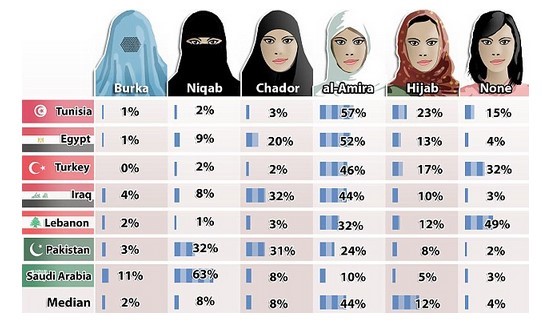
sartorial habits
Only a few pregnant women met the recommended dietary daily intake of calcium and vitamin D. Vitamin D supplementation was not a common practice.
Conclusions: Hypovitaminosis D during pregnancy is prevalent in the Mediterranean region. Racial, social and cultural habits, as well as the absence of preventive strategies seem to negate the benefits of sun exposure.
Download the PDF from VitaminDWiki
See also VitaminDWiki
Pregnancy category listing has items along with related searches
Overview Middle East and vitamin D
84 percent had less than 30 ng of vitamin D (10,000 patients in Saudi Arabia) Sept 2014
ALL of the top 10 health problems of women are associated with low vitamin D
Overview Pregnancy and vitamin D has the following summary
{include}
And: Pregnancy problems vs Vitamin D level - GrassrootsHealth Feb 2015

From June 2014